Spending more on SEO isn’t always smarter. If you run a small business or startup, every dollar must prove its worth. That’s where low price seo shines: a focused, budget‑conscious approach that prioritizes essentials, trims waste, and compounds results over time. Instead of sprawling campaigns, you get strategic quick wins, clear reporting, and predictable costs that you can dial up or down as you grow.
In this guide, you will learn exactly what low price seo is, how it differs from premium services, and when it makes sense. We cover the core components of affordable packages, the best free and low‑cost tools, and a step‑by‑step framework to choose the right solution for your goals and industry. You’ll also see how to set realistic budgets, avoid common pitfalls of cheap SEO, and measure ROI using simple dashboards and metrics. By the end, you’ll be ready to launch a lean, effective SEO plan that fits your budget and drives real revenue.
What Is Low Price SEO and Why It Matters
Definition and how it differs from premium services
Low price SEO refers to search engine optimization work designed to deliver measurable results on a limited budget. Unlike premium or enterprise-level SEO, which often includes custom strategy, dedicated teams, expensive tools, and ongoing high-touch consulting, low price SEO focuses on essential tactics that move the needle without heavy overhead. The difference is not just cost — it’s scope, scale, and expectation management. Premium services chase aggressive growth and broad keyword coverage; low-cost efforts target core opportunities and steady improvement.
Budget constraints and tool selection
When money is tight, choices change. Budget limits dictate which platforms, analytics tools, and reporting systems you can use. Instead of enterprise suites, small businesses rely on cost-effective SEO tools or free tiers that deliver core functionality: keyword research, basic backlink checks, and simple rank tracking. That often means more manual work and smarter prioritization rather than full automation. For many small operators, a combination of inexpensive subscriptions and DIY tactics achieves practical results.
Strategy differences driven by cost
Strategy under a constrained budget is pragmatic: pick high-impact, low-effort wins. That might include on-page optimization for primary pages, local SEO, citation cleanup, and a focused content plan targeting buyer-intent keywords. Low price SEO services and affordable SEO packages typically emphasize these tactical wins over broad content campaigns or complex technical overhauls. The goal is steady gains without the burn rate of larger engagements.
Primary goals for small businesses
Low price SEO campaigns are measured differently than enterprise programs. For small budgets, the primary objectives are practical and revenue-focused:
Improve visibility for targeted queries: Rank for a small set of high-intent keywords that drive sales or leads.
Increase local presence: Optimize Google Business Profile, citations, and local landing pages to capture nearby customers.
Maximize ROI: Track conversions and prioritize activities with the best cost-to-return ratio.
Build sustainable foundations: Implement SEO basics—title tags, meta descriptions, site speed fixes—so future investment is more effective.
Enable growth without debt: Use scalable, pay-as-you-go models or DIY SEO on a budget to maintain flexibility.
In short, a low price SEO approach matters because it makes search optimization accessible to small businesses and startups that cannot afford enterprise programs. Properly executed, it leverages inexpensive SEO tools, focused effort, and measurable priorities to produce steady, cost-effective results. For businesses with limited marketing spend, choosing the right mix of tactics and tools is the difference between wasted budget and sustainable growth through organic search.
Key Benefits of Choosing Budget-Friendly SEO
Choosing a budget-conscious approach to search optimization delivers tangible business advantages. With low price seo, companies reduce upfront costs and overhead, freeing cash for product development or local marketing. Affordable strategies often focus on high-impact tasks—technical fixes, local citations, and targeted content—that drive measurable traffic quickly. For many small teams, this means faster return on investment compared with costly, long-term retainers.
Lower overhead and faster ROI
Low-cost SEO reduces fixed expenses by prioritizing essentials over broad campaigns. A small retailer can use targeted keyword pages and local listings to increase foot traffic within weeks, turning modest spend into additional sales. Because inexpensive campaigns emphasize quick wins, businesses see faster ROI: rankings and conversions improve without large monthly fees. That speed is a primary reason many opt for low price seo when budgets are tight.
Flexibility and transparent pricing
Budget-friendly plans usually offer clear, simple pricing and flexible terms. Services like pay-as-you-go setups or modular affordable SEO packages let owners choose only the work they need. Transparent fees reduce surprises and make it easier to forecast marketing expenses. When goals change—seasonal offers or a new product—these plans scale up or down without breaking the bank, giving operators control and predictability.
Scalability for growing businesses
Contrary to assumptions, economical SEO can scale. Starting with low-cost initiatives creates a foundation—optimised content, clean site architecture, and local authority—that supports later investment. As traffic and revenue grow, teams can expand to more aggressive keywords or national outreach. This stepwise growth model lets businesses test hypotheses and reinvest profits, so low price seo becomes the first tier of a sustainable growth ladder.
Real-world examples
A neighborhood café used a low-cost local content strategy and improved Google Business Profile listings to rank for “best breakfast near me,” doubling morning customers in two months. A freelance design studio combined economical link outreach and niche blog posts to win regional contracts and compete with larger agencies on price and expertise. In both cases, low price seo enabled local and national competition without large marketing departments.
Tools and process advantages
Economical SEO often leverages cost-effective tools and clear workflows—keyword trackers, basic analytics, and content templates—so teams move faster and waste less. For agencies comparing collaboration models, consider choices like a group SEO tool vs multi-seat plans to decide which delivers more value per dollar. Small businesses working on SEO for small budgets can use these tools to monitor performance and reallocate spend toward top performers.
Summary of benefits
Reduced overhead and faster ROI through focused work.
Flexible, transparent pricing and pay-as-you-go options.
Scalable foundation that supports future investment.
Practical tools and processes that maximize limited resources.
Overall, low-cost search strategies let small and growing businesses compete efficiently, test ideas quickly, and scale responsibly while keeping financial risk low—making low price seo a pragmatic choice for many budgets.
Core Components of Low Cost SEO Packages
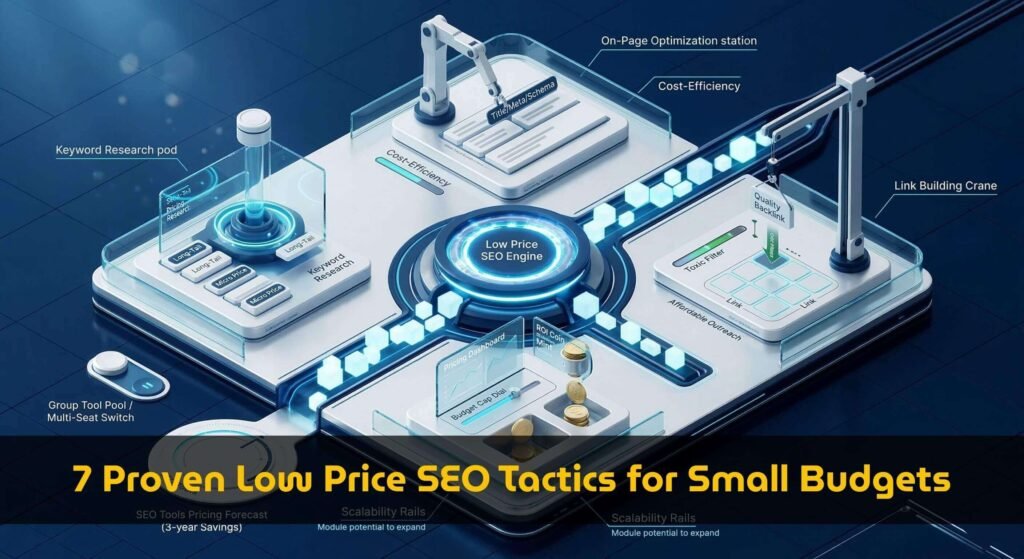
Low price SEO packages concentrate on a handful of core services that move rankings without the overhead of enterprise tools or large teams. The typical bundle includes keyword research, on-page optimization, technical audits, and link building. Each component targets a critical fault line in search performance, and budget-friendly SEO relies on lean processes and cost-effective tools to deliver measurable results.
Keyword research
Good keyword research identifies opportunity terms that match intent and budget. For low price seo offers, providers usually use free or low-cost tools like Google Keyword Planner, Ubersuggest, and limited tiers of paid tools to find short- and long-tail phrases. The work focuses on search volume, competition, and relevance rather than exhaustive keyword maps. Cheap SEO services lean on competitor analysis and prioritized lists to maximize impact with minimal spend.
On-page optimization
On-page optimization is where most immediate gains happen: title tags, meta descriptions, headings, content tweaks, image alt text, internal linking, and basic schema. In affordable SEO packages this step is often manual and checklist-driven, using plugins such as Yoast or Rank Math and lightweight content-editing guidance. Because budgets are tight, inexpensive SEO solutions prioritize pages with the highest conversion potential rather than full-site overhauls.
Technical audits
Technical health prevents search engines from crawling and indexing your best pages. A technical audit in a budget plan covers crawl errors, mobile usability, site speed basics, sitemap and robots.txt checks, and common indexation issues. Budget tools like Screaming Frog (free tier), Google Search Console, and PageSpeed Insights handle many tasks adequately. For estimating fixes and ongoing needs, check the SEO audit cost to understand trade-offs between DIY fixes and paid remediation. Low price SEO audits are narrower than premium ones but catch the critical blockers.
Link building
Links remain a key ranking signal, but low-cost search engine optimization strategies favor safer, scalable tactics: targeted outreach, niche directories, local citations, guest posts with realistic expectations, and broken-link reclamation. Budget-friendly SEO often uses affordable tools or manual outreach workflows rather than expensive link platforms. That limits volume but focuses on relevance and authority, which is more cost-effective for small budgets.
How budget tools compare to premium platforms
Budget tools deliver core functionality but with trade-offs: smaller datasets, fewer automation features, and less historical data. Premium platforms provide deeper keyword pools, advanced link analytics, and extensive site crawls. For low price seo buyers the decision is between tool cost and human time—cheap SEO services substitute manual analysis and focused tactics where premium tools would automate. Pay-as-you-go SEO or DIY SEO on a budget can bridge gaps by combining free tools with targeted freelance help.
In short, economical SEO plans concentrate resources where they move the needle: targeted keywords, on-page wins, quick technical fixes, and selective link acquisition. When executed well, low price seo can deliver steady growth without enterprise spending.
Top Low Price SEO Tools and Services for Small Businesses
If you need low price seo options that actually move the needle, here’s a curated list of affordable tools and agency services. Each entry includes pricing, main features, pros and cons, and ideal use cases. Where relevant I compare free vs paid entry plans and note trials. For agency help, see affordable SEO services for small businesses.
Google Search Console + Google Analytics (Free)
Baseline tools every small business should use. Completely free and essential for technical visibility and traffic analysis — perfect for DIY SEO on a budget.
Pricing: Free
Main features: Indexing reports, performance queries, site errors, organic traffic sources.
Pros: No cost, direct from Google, accurate search data.
Cons: Limited keyword-level visibility, steeper learning curve for non-technical users.
Ideal for: Startups and solopreneurs doing in-house, low price seo basics.
Ubersuggest (Neil Patel)
Budget-friendly SEO with clear UX and useful keyword/competitor reports. Good step-up from free tools for content planning.
Pricing: Free limited plan; paid from ~$12/month (annual billed).
Main features: Keyword research, site audit, rank tracking, content ideas.
Pros: Affordable entry tier, user-friendly, good for content teams.
Cons: Data depth less than enterprise tools; limits on historical data.
Ideal for: Small teams wanting low price seo insights without high cost.
SE Ranking
One of the most cost-effective paid platforms with scalable plans and accurate rank tracking. Often recommended as a low-cost search engine optimization solution.
Pricing: Starting around $39/month (discounts for annual billing).
Main features: Rank tracking, site auditing, backlink monitoring, on-page checker.
Pros: Competitive price, feature-rich, great support.
Cons: Interface can feel dated; add-ons cost extra.
Ideal for: Agencies and SMBs needing robust, budget-friendly SEO reports.
Screaming Frog SEO Spider (Freemium)
Desktop crawler ideal for technical audits. Free version crawls limited pages; paid license unlocks full site audits for a single user.
Pricing: Free limited; paid license ~£179/year.
Main features: Crawl errors, redirects, duplicate content detection, XML sitemaps.
Pros: Deep technical insights, essential for migrations and audits.
Cons: Desktop-based, steeper learning curve.
Ideal for: Technical SEO tasks on a low price seo budget.
Moz Pro (Entry-Level)
Balanced toolset with beginner-friendly UI and good keyword suggestions. Free trial available; entry plans are mid-range but often discounted for annual billing.
Cons: More expensive than some budget tools at scale.
Ideal for: Small businesses ready to upgrade from free tools.
Low-Cost Agencies & Pay-as-You-Go Services
For businesses that prefer outsourcing, search for agencies offering pay-as-you-go SEO or affordable monthly packages. Look for transparent reporting, clear deliverables, and trial months. For comparisons and to plan expenses, review long-term SEO tools pricing to forecast ongoing costs.
Pricing: From $300/month for basic packages to $1,000+ for comprehensive plans; pay-as-you-go varies.
Main features: Content creation, local SEO, link outreach, technical fixes.
Pros: Saves time, leverages expertise, measurable ROI.
Cons: Quality varies—vet references to avoid cheap SEO services that underdeliver.
Ideal for: Small businesses that need results without hiring full-time staff.
How to Choose the Right Low Price SEO Solution
Choosing a low price seo solution requires a clear, repeatable decision framework. Start by matching options to your business size and growth plan, then layer in industry needs, real costs, must-have features, and the level of support you require. Use the steps below to narrow choices quickly and avoid common pitfalls of cheap SEO services and one-size-fits-all packages.
Step 1 — Define business size and goals
Small local shops, growing e-commerce sites, and established service firms all need different capabilities. For micro-businesses, prioritize local ranking, citations, and simple reporting. Mid-size companies often need technical SEO, content scaling, and competitor tracking. Enterprises require advanced APIs and integrations. State your 6–12 month goals upfront — traffic lift, leads, or conversions — then test options that map directly to those outcomes.
Step 2 — Evaluate industry complexity
Some industries (health, legal, finance) face stricter rules and higher keyword competition. Low price seo tools that work for retail might not support compliance, schema markup, or detailed audits needed by regulated niches. Match tool capabilities to your vertical: e-commerce needs product schema and site speed monitoring; local services need citation management and review tracking.
Step 3 — Set a strict budget cap and pricing model
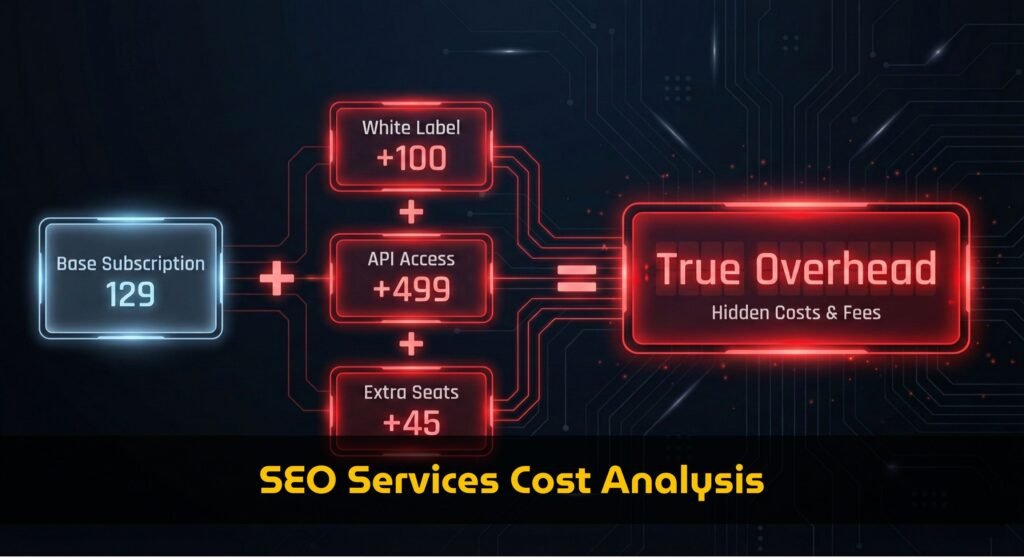
Decide your absolute monthly and annual caps and choose a pricing model that fits — flat-fee packages, pay-as-you-go, or seat-based tools. Factor in onboarding, content, and any paid campaigns. For honest expectations on recurring costs and hidden fees, review industry benchmarks like SEO software cost. Remember: cheaper upfront can mean higher long‑term work hours or poor results.
Step 4 — List required features and integrations
Create a must-have vs nice-to-have feature matrix. Typical must-haves: keyword tracking, site audits, backlink analysis, content recommendations, and reporting exports. Also check integrations with Google Analytics, Search Console, CMS, and CRM. If you plan DIY, prioritize tools with intuitive UIs and learning resources to reduce consultant dependence. Affordable SEO packages should cover core needs without bloat.
Step 5 — Assess support, transparency, and reviews
Support quality separates effective budget-friendly SEO from false economies. Confirm support hours, response SLA, and whether you get a dedicated rep. Ask for case studies in your industry and verify claims. Low price SEO services with poor transparency often hide limits; insist on sample reports and clear KPIs before committing.
Step 6 — Trial, metrics, and contract terms
Always start with a free trial or short pilot. Set measurable success criteria (rankings, organic visits, conversions) and a review date. Avoid long lock-in contracts until the pilot proves value. Check cancellation terms and data export capabilities so you can switch without losing history.
Pre-commitment checklist
Does this solution match my business size and 6‑month goals?
Is the vendor experienced in my industry or niche?
Can I afford the monthly and annual totals, including onboarding?
Are the required features included, or are they add-ons?
What level of support is provided and what are SLAs?
Can I trial the product and see real sample reports?
Are contract terms flexible with easy data export?
Do reviews verify the vendor’s performance and transparency?
Following this framework will help you pick a low price seo option that delivers real results without surprise costs. For small budgets, consider combining DIY tactics with a focused inexpensive SEO solution or affordable SEO packages to maximize ROI.
Measuring ROI and Long-Term Success with Low-Cost SEO
Track the right metrics
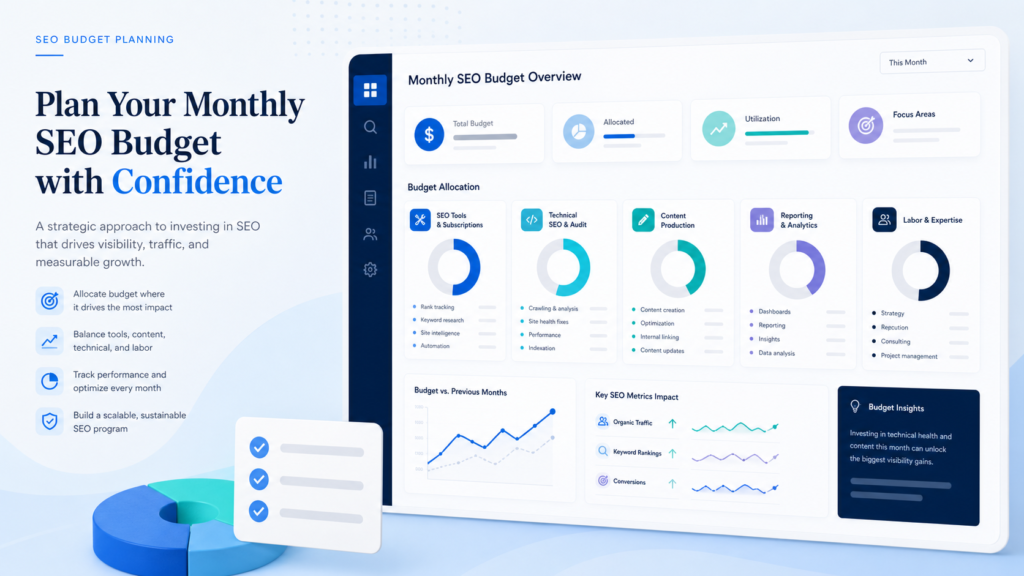
Start by focusing on four core metrics: organic traffic, keyword rankings, conversion rates, and overall ROI. Organic sessions show visibility growth. Keyword positions reveal whether on-page and content work. Conversions (form fills, sales, signups) connect traffic to value. Calculate ROI by comparing revenue or lead value against spend — even if spend is just time or low-cost SEO tools. For cheap SEO services or DIY efforts, this simple framework keeps measurement clear and actionable for any low price seo strategy.
Free and low-cost tools
Use free platforms first: Google Analytics (GA4), Google Search Console, and Bing Webmaster Tools cover traffic, queries, and index issues. For ranking and competitive checks, try free tiers of tools like Ubersuggest or small monthly plans from rank-tracking services. Use Looker Studio (formerly Data Studio) to build visual dashboards without extra cost. Cheap SEO services often rely on these same tools, and combining them with a spreadsheet can serve as a no-frills reporting stack for low price seo efforts.
Reporting methods that scale
Create repeatable reports: weekly traffic snapshots, monthly ranking summaries, and quarterly ROI statements. Automate data pulls into a Looker Studio dashboard or export CSVs to a spreadsheet. Use UTM tags on campaigns to attribute conversions accurately and set up Goals or Conversions in GA4 for reliable tracking. If you need a starter template, adapt an internal reporting template to reflect the KPIs above. For external best-practice guidance, consult an external analytics guide.
Measuring keyword and conversion impact
Track a short list of priority keywords rather than hundreds; quality beats quantity for budget-focused plans. Monitor position trends, click-through rate (CTR) from search console, and landing-page conversions. For content-driven gains, measure organic landing pages that produce leads and focus optimization on the top 10–20% of pages that drive most results. This prioritization is the backbone of affordable SEO packages or pay-as-you-go SEO approaches and helps maximize returns on limited spend.
Ongoing optimization and scaling
Use a test-and-learn cycle: implement a change, measure six to twelve weeks of performance, then iterate. Reallocate any small budget increases to tactics that prove ROI — high-performing content updates, targeted link outreach, or local listing optimization. As budgets grow, add modest paid tools for advanced rank tracking or backlink analysis. Keep documentation of tests, wins, and lessons so each incremental investment compounds results and validates your low price seo choices.
Practical tips for long-term success
Maintain a monthly scorecard (traffic, ranks, conversions, CPA), set realistic time horizons (SEO is cumulative), and make data-driven choices about where to spend limited funds. For businesses on a tight budget, prioritize conversion optimization alongside traffic growth — a small lift in conversion rate often outperforms a large lift in raw visits. These disciplined steps turn budget-friendly SEO into a sustainable growth engine.
Conclusion
Low price SEO is about focus, speed to value, and scalability. Prioritize high‑intent keywords, fix on‑page basics, run lightweight technical audits, and build relevant, trustworthy links. Use transparent pricing, start with a short pilot, and track the metrics that matter most: traffic, rankings, conversions, and ROI.
Ready to turn small spend into big wins? Use the pre‑commitment checklist, launch a 30‑day pilot, and double down on what proves ROI. If you need a partner, reach out for a quick mini audit and tailored roadmap. Start today, stay disciplined, and let each incremental win compound into sustainable growth.